A short explanation of ‘What is a Psychopath?‘

A short explanation of ‘What is a Psychopath?‘

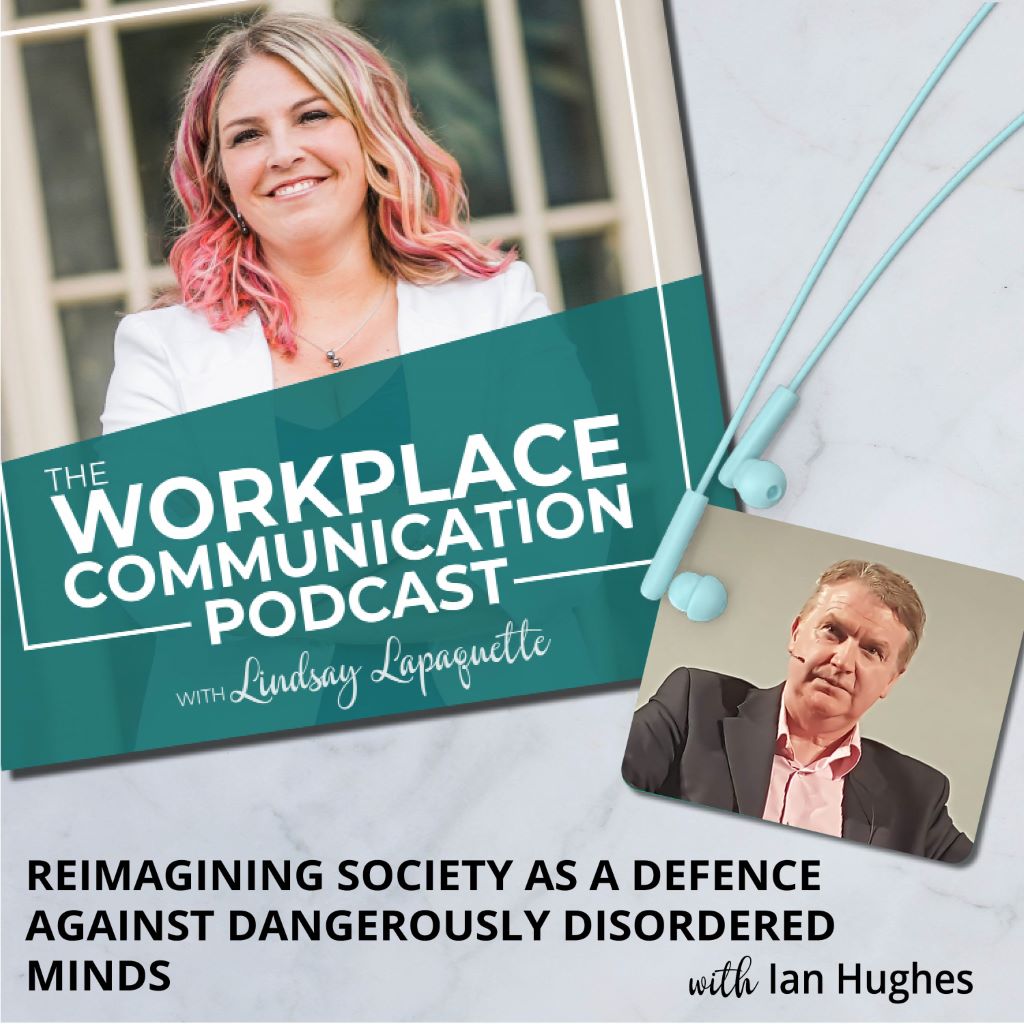
On this episode of The Workplace Communication Podcast, Ian Hughes shares profound insights into how personality disorders can profoundly impact societal structure.
As the author of “Disordered Minds: How Dangerous Personalities are Destroying Democracy”, Ian’s research and understanding of history and human psychology unravel the complex interplay of psychological and societal dynamics that enable individuals with personality disorders to rise to positions of authority. Once in power, it is not uncommon for these individuals to perpetuate cycles of abuse through their leadership.
Listen to podcast here

This blog summarises French philosopher Alain Badiou’s important book A New Dawn for Politics. In it, Badiou criticises Western democracy for acting as the central force sustaining a corrupt and unjust global order. This blog can be read in conjunction with a previous blog on Noah Chomsky whose ideas mirror those of Badiou.
Capitalist Modernity as the Contemporary Neolithic
Since history began, human beings have been living in hierarchical societies ruled by an elite, preserved by a minority (who benefit from the arrangement), while subjugating a majority. This basic form has persisted since pre-history. According to Badiou, contemporary capitalist modernity is simply the latest in a long line of variations on this basic social template that has been with us since the Neolithic. Such a system, by its very nature, can only be maintained through violence and brings with it “monstrous inequalities, military massacres, and false and dangerous ideologies and understandings of the world.”
Continue readingReimagining a More Just and Sustainable Society – The Role of Critical Theory
“A new categorical imperative has been imposed by Hitler upon unfree mankind: to arrange their thoughts and actions so that Auschwitz will not repeat itself; so that nothing similar will happen.”
Theodor Adorno
Introduction
This blog is based on Stuart Jeffries’ wonderful book Grand Hotel Abyss which covers the lives and thought of the Frankfurt School of philosophers, whose leading figures include Walter Benjamin, Theodor Adorno, Max Horkheimer, Herbert Marcuse, and later Jurgen Habermas. Beginning in the 1920s, these thinkers passionately struggled to understand the reasons for Hitler’s mass support in Germany, the appeal of Stalinist Communism, and the destructive appeal of unregulated consumer Capitalism. Their deep understanding of culture, how forms of culture can lead humanity to barbarism, and why culture is so difficult to change, are still hugely relevant today as we stare, again, into the Abyss – of climate change, war, and global instability.
Continue readingThe dominant narrative of human social evolution tells how our ancestors advanced from hunter gatherer clans to larger settlements, made possible by agriculture, and on to cities and modern nation states. With this growth in scale and complexity, leaders, bureaucracies and standing armies became necessary to maintain order and ensure security. Moreover, this linear path to ‘modern society’ has enabled greater levels of wealth and wellbeing than our ancestors could ever have dreamed of. As a result, we are living today in the best of all possible worlds.
The Dawn of Everything questions this comforting narrative and tells a very different story. It tells of how we lived for most of our time on Earth without presidents, kings, and pharaohs. It tells how our ancestors were acutely aware of the dangers of authoritarianism and were able to design and maintain, for thousands of years, social structures to guard against it. And it asks what went wrong? How did we come to live in this ‘best of all possible worlds’ in which so many a-holes – the Trumps and Putins and Xis – are in charge?
Continue readingThe job of the historian is to understand the history passing through us.
Ivan Jablonka
A History of Masculinity by French historian Ivan Jablonka joins the dots between the persistence of war, violent strongman leaders, the devaluation of care in modern societies, and the systemic discrimination against women and girls that still lies at the heart of the modern state.
The Narcissistic Hypermasculine State
Jablonka begins with the observation that masculine domination is one of the most universal and enduring features of human societies, and he traces this deep wound at the heart of human civilisation right back to the very advent of the State. From its origins millennia ago, the State has been predominantly the purview of male God-Kings, Emperors, Sultans, Presidents and Prime Ministers.
Up until the, historically recent, advent of democracy, male rulers relied largely on violence, and on all-male armies, to maintain their power. In this world of all-against-all, the most ruthless gained and managed to remain in power. This dynamic of violence and militarism, as Vladimir Putin’s barbaric assault on Ukraine tragically reminds us, remains at the core of global geopolitics, and favours men with a very specific psychology – namely the violent, the aggressive, the ruthlessly ambitious, the pathologically narcissistic, those without conscience.
Continue readingThis new article in the Irish Times by Filomena Kaguako explores how this disorder is believed to stem from a lack of nourishment in childhood, which results in the person being unable to care for themselves in later life. Continue reading here